Op 28 september spelen we op Planet Plato, de jaarlijkse Showcase van platenzaak Plato.
Vijf euro entree maar bij besteding van 10 euro bij Plato in de Ebbingestraat 2 kaartjes gratis.

Op 28 september spelen we op Planet Plato, de jaarlijkse Showcase van platenzaak Plato.
Vijf euro entree maar bij besteding van 10 euro bij Plato in de Ebbingestraat 2 kaartjes gratis.
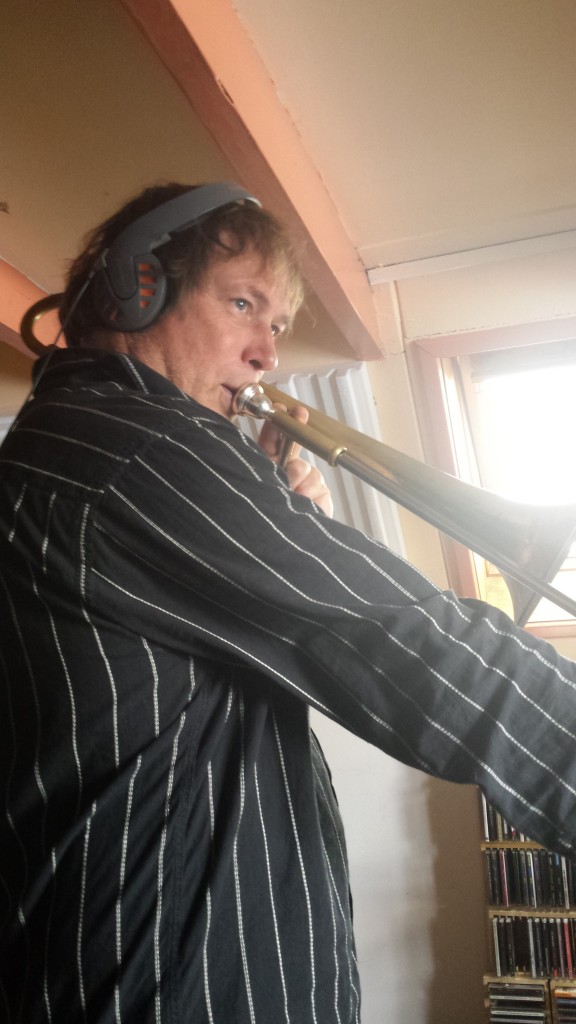
De opnames voor ‘De Bosklopper Tapes’ zijn nog steeds in volle gang. Inmiddels staat het meeste wel op de band maar vanmiddag reisden we af naar Lutjegast alwaar Amsterdam Klezmer Band-trombonist Joop van der Linden een prachtige solo voor ‘Moak die mor nait drok’ inspeelde.
Vanmiddag was mondharmonicaspeler Richard Koster in de studio om een aantal partijen voor de nieuwe Nozems-cd ‘De Bosklopper Tapes’ in te spelen.
Richard komt oorspronkelijk uit Ter Apel en kon zich dan ook goed inleven in de blues- en countrynummers uit de Veenkoloniale archieven.
Producer Wynosaur werkt aan de ritmische finesses van het nummer ‘Moak Die Mor Nait Drok’ middels hoogwaardig percussieinstrumentarium zoals een lege bierfles, een asbak en een volle fles rode wijn (de laatste met dank aan het kerstpakket van Radio Noord).
Tijdens de opnames van hun nieuwe cd ‘De Bosklopper Tapes’ proberen de Nozems zo veel mogelijk gebruik te maken van de indertijd ook in de Veenkolonies aanwezige instrumenten.
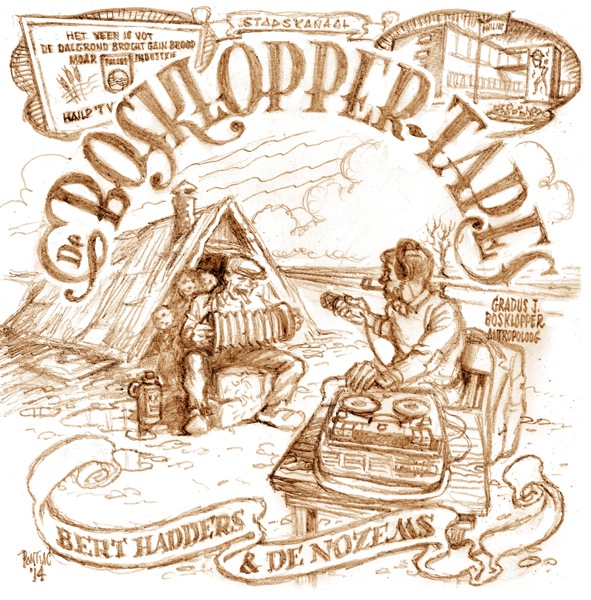
Al sinds hij tekende voor de Muziek Expres begin jaren zeventig ben ik groot fan van het werk van tekenaar Peter Pontiac.
Voor de hoes van onze komende cd ‘De Bosklopper Tapes’ durfde ik hem eindelijk te benaderen.
Hoewel verre van gezond en bezig met zijn Magnum Opus over de dood heeft hij tot onze grote vreugde tijd willen vrijmaken voor een tekening van antropoloog Gradus J. Bosklopper in zijn werkomgeving.
Hierboven de eerste aanzet. De uiteindelijke versie zal in postervorm aan het cd-doosje toegevoegd worden.
Verkrijgbaar vanaf eind september.
Wil je meer weten over Peter Pontiac en zijn werk?
Kijk hier een korte documentaire
Lees nu de volledige tekst van de toespraak die dr. Gerard Nijeveen van het Meertensinstituut hield tijdens de opening van het Gradus J. Bosklopperjaar in de Silo te Groningen.
Vele felle reacties pro- en contra de hooggeleerde wetenschapper volgden op de hieronder weergegeven rede.
In de Drentse Veenkoloniën veroorzaakte de mening van Nijeveen een mate van volkswoede die doet denken aan de controverse die ontstond na de vondst van vuistbijlen uit de oertijd door de ten onrechte verguisde archeoloog Tjerk Vermaning.
Lees hier de toespraak
De voorverkoop voor de Bosklopper-show van Bert Hadders en de Nozems op vrijdag 12 december is nu begonnen.
Bestel je kaarten hier
De Groninger cineast Johan Zielstra maakte een interessante documentaire over de Kozakken in Nederland.
Bert Hadders is in beeld als vertolker van teksten die Groninger ooggetuigen uit de kozakkentijd optekenden.
Nu te zien op Holland Doc: http://www.hollanddoc.nl/kijk-luister/documentaire/s/stormvogels-van-de-tsaar.html
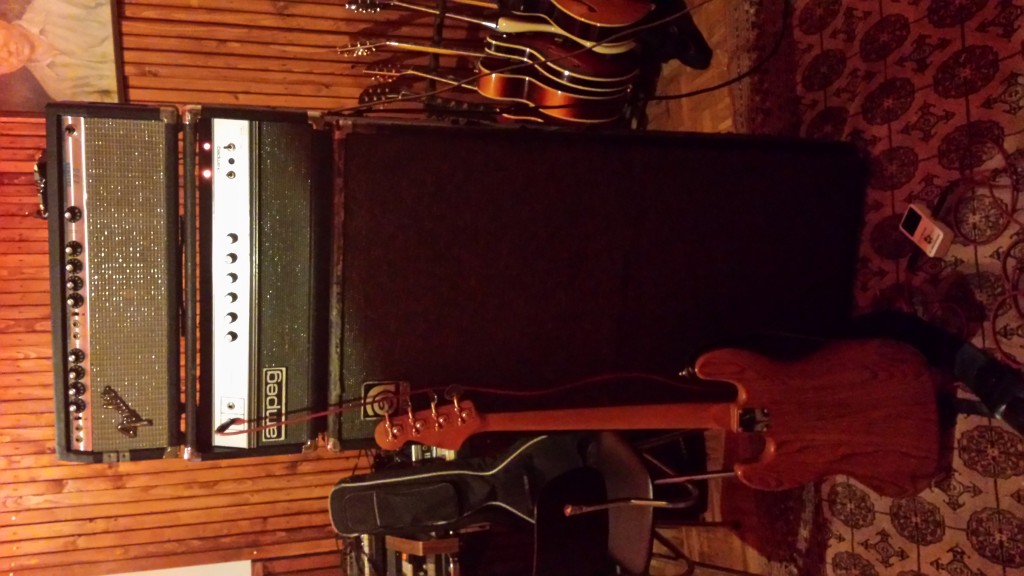
De afgelopen week hebben de Nozems een flink aantal liedjes uit de nalatenschap van Gradus J. Bosklopper op de band vastgelegd.
Daarvoor werd de No Pussy Blues Studio te Oosterhoogebrug als locatie gekozen.
Deels vanwege de geringe fietsafstand vanaf huis maar vooral om de grote hoeveelheid ´vintage´ apparatuur, de expertise van technicus-eigenaar Klaas Pot en niet in de laatste plaats het fijne behangetje.
In drie dagen namen de mannen ´As Julio Gait Zingen´, ´Leste Traain Noar Knoal´, ´Beloofde Laand´, T Is Oorlog Zee De Kaizer´, ´Moak Die Mor Nait Drok´, ´Lola´, ´Pekelder Waals´ en een instrumental genaamd ´Zundapp´op.
De CD wordt eind september gepresenteerd in het Viadukt te Groningen, gevolgd door een tournee langs de noordelijke zalen.
Blogger Evert uit Haren comes to the rescue!
On the Anthropologist Gradus J. Bosklopper
One of my favorite regional artists is Bert Hadders. I promised in my last blog I would write about King’s Day. Well, here I go: I heard him play at King’s Day in my village. He played with his band De Nozems at the central square. In front of him sat some real fans; they spoke dialect and had fun. On the side, on the cafe terrace, the local elite was looking blase over a white wine. A little bit the John Lennon-idea: “Those in the cheaper seats clap. The rest of you, rattle your jewelry.”
But the band was great, as was Bert Haddders. One of his songs I like best is “Elvis, Keuning van de Bunermond”, a song about a local hero somewhere in the Wild East of the Groningen province, the place we call Veenkoloniën (literally “the Peatbog Colonies”, I guess), also because this song has such an irresistible video clip.
So far for my reports on King’s Day. But last Saturday Bert Hadders had a huge interview in the regional newspaper. He had bought, on an earlier Queeen’s Day (yes, yes, we changed our Head of State), a tape recorder with some tape reels, he claims; and the tape reels contained a collection of fieldwork recordings from the fifties and sixties of he last century. Indigenous songs from the Peatbog Colonies (“hillbilly, blues, rock ‘n’roll, country”, as Hadders describes them), sung in the local dialect and collected by the famous anthropologist Gradus J. Bosklopper, Peatbog’s own Alan Lomax, as Bert Hadders claims. He adds that it is very unusual that the songs are sung in dialect, because all other songs collected in the Netherlands (find them on de Liederenbank) are sung in standard Dutch, not in local languages and dialects – a still astonishing but very true fact, showing that Bert Hadders did his homework. Of course, Boskloppper has by now mysteriously vanished (Hadders claims that the latest known fact is that Bosklopper joined a hippy commune – “… and you know what that means”).
I love all this. Of course, Hadders has made a musical programme out of the tapes, and is going on tour through the Peatbog Colonies with it. “People may dance, we have a licence for that”, he announces – I think that if I would ask him to show the licence he would immediately be able to provide an extremely official document with lots of stamps from the Ministry of Culture of the Peatbogs. He is such a man. His project is much more interesting than the project “Oost-Groninger Wereldmuziek” (“World Music from East Groningen”), I think. But both projects at least show one thing: that not only every African village is entitled to its own anthropologist (I remember a cartoon where two ‘Natives’ meet and the one asks the other: “Who is your anthropologist?”), but that anthropologists of music and ethnomusicologists may think that they should study places far off but that actually the best chance for a High Status Career lies just around the corner.
Bert, if you need me to become your personal Ethnomusicologist, I am yours.
Site design: Digital Magician